
Zoom Virtual Assistant (Virtual Agent): AI-Powered Self-Service for Voice & Chat
Deliver instant answers 24/7. Zoom Virtual Assistant combines conversational AI with seamless escalation to live agents—reducing handle time, deflecting calls, and improving customer satisfaction. [strong]TCS[/strong] designs, implements, and supports Zoom Virtual Assistant solutions tailored to your workflows and tech stack.
- Voice & chat self-service with natural language
- Smart routing + smooth escalation to agents
- No-/low-code build, analytics, & continuous optimization
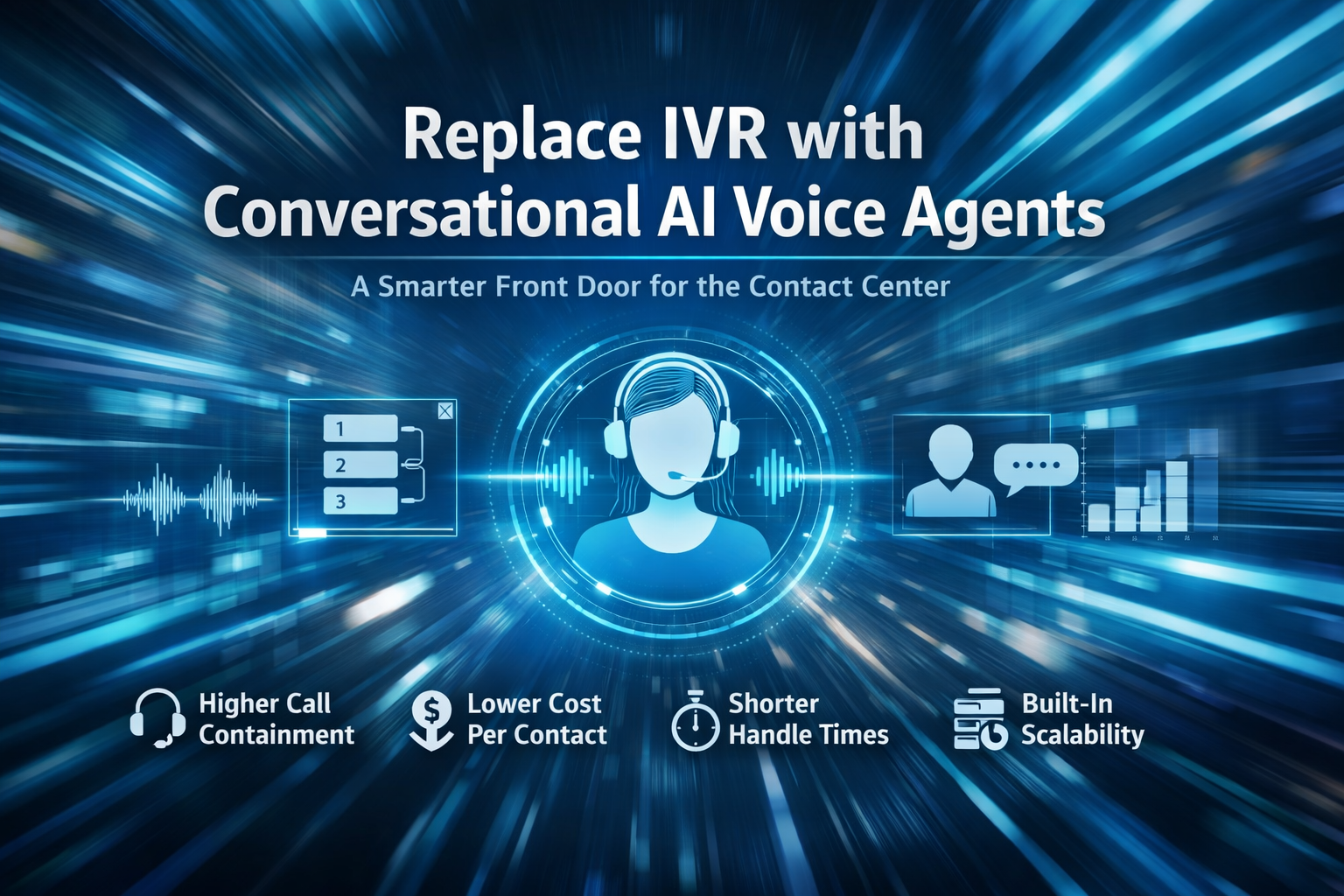
Why Your Contact Center Needs a Virtual Assistant
Customers expect immediate help on any channel. Legacy IVR menus and basic chatbots frustrate users, slow agents down, and inflate costs. Zoom Virtual Assistant enables conversational self-service that understands intent, gathers context, and resolves tasks—then hands off to live agents with transcripts when needed.
24/7 Availability
Always-on support across time zones and peak demand.
Lower Costs
Deflect routine calls and chats; free agents for complex issues.
Faster Resolution
Natural language interactions resolve common requests end-to-end.
Better CX
Consistent, brand-aligned conversations with smooth escalation.
What Is Zoom Virtual Assistant?
Zoom Virtual Assistant (also called Zoom Virtual Agent) is an AI-powered assistant for voice and chat. It understands natural language, performs lookups and transactions through integrations, and can seamlessly escalate to Zoom Contact Center or Zoom Phone without losing context.
-
Voice + Chat: Provide help through phone and web or messaging channels
-
No-/Low-Code Build: Rapidly design intents, flows, and guardrails
-
Integration-Ready: Connect to CRM systems, ticketing platforms, and knowledge bases
-
Analytics: Track containment rates, intent accuracy, and drop-off points
-
Brand Persona: Configure tone, prompts, and escalation rules
Use Cases & Business Outcomes
Customer Support
Handle FAQs, order status, billing, and account changes with self-service, then hand off to agents with full context.
Digital Receptionist
Natural-language call answering, routing, and information capture for front-office scenarios.
IT Helpdesk
Automate password resets, status checks, and how-to guidance for employees.
Appointment & Intake
Collect details, pre-qualify, and schedule—or queue for the right team automatically.
Impact: Reduced queue times and costs, higher CSAT, improved agent productivity, and actionable insights from conversation analytics.
How TCS Implements Zoom Virtual Assistant
-
Discovery & Assessment: Define goals, channel mix, volume patterns, knowledge sources, and escalation paths
-
Design & Persona: Create intents, flows, tone, guardrails, fallback logic, and analytics KPIs
-
Integrations: Connect CRM, ticketing systems, knowledge bases, Zoom Contact Center, and Zoom Phone
-
Build (No-/Low-Code): Rapid prototyping and configuration with iterative reviews
-
Testing & QA: Voice and chat simulations, edge-case handling, and NLU tuning
-
Rollout & Training: Pilot to phased launch, agent training, and change management
-
Optimize: Monitor containment, refine prompts and knowledge, and expand intents
Need full lifecycle help? Explore our Implementation and Managed Services offerings.
Technical & Security Considerations
-
Network readiness, voice quality, and latency targets
-
Privacy, access control, and compliance (data retention and auditing)
-
Multi-language support and accessibility
-
Monitoring, logging, and change management
-
Resilience, fallback strategies, and human-in-the-loop controls

FAQ
Virtual Assistant uses conversational AI with richer context handling, integrations, and analytics, plus native escalation into Zoom Contact Center/Phone.
Basic deployments can launch in weeks; complex flows and deep integrations may be phased. We’ll propose a timeline after discovery.
Yes—TCS integrates your stack and configures secure, compliant data flows.
Key metrics include containment, first-contact resolution, average handle time, CSAT, and deflection rates.